
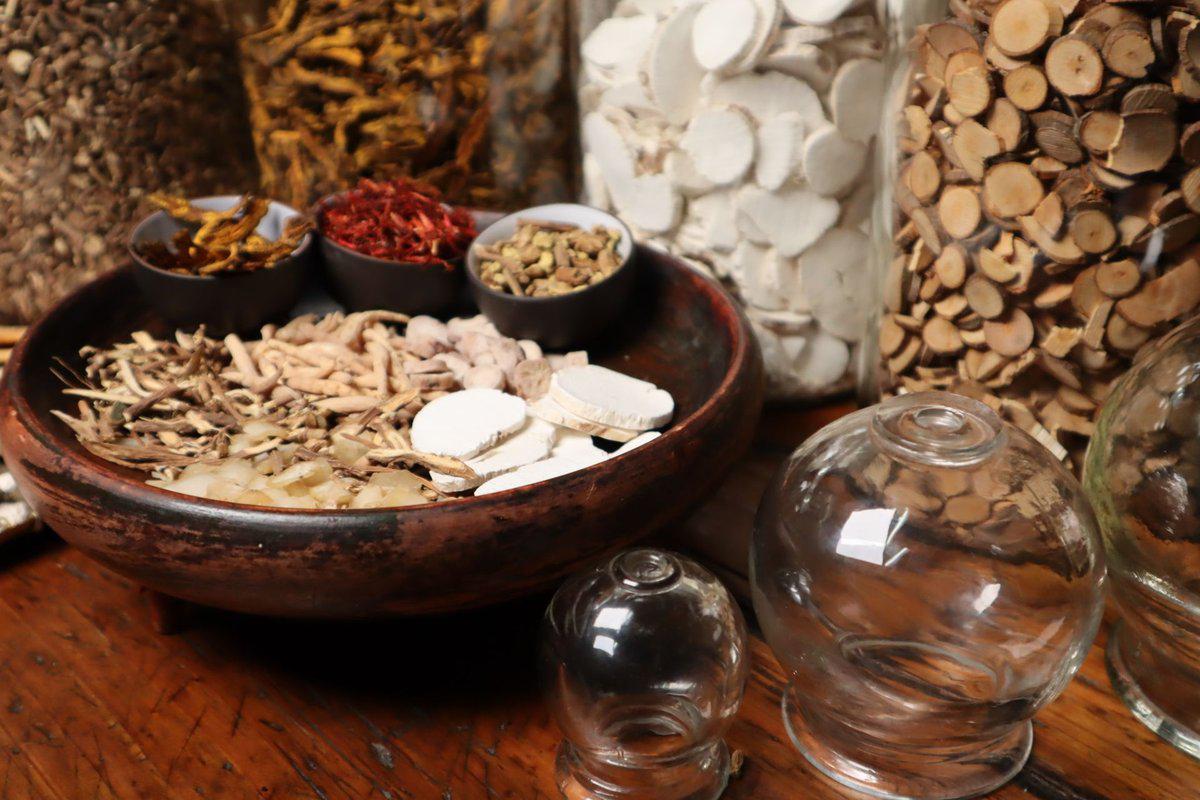
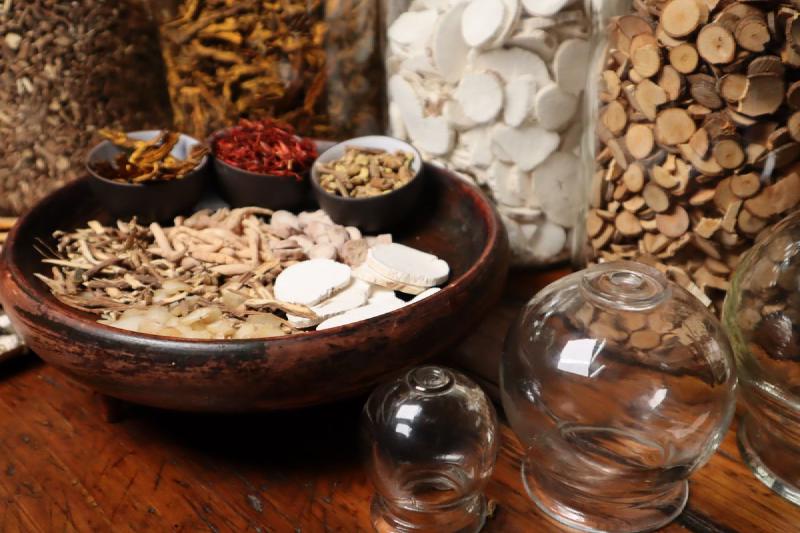
When Tu Youyou accepted the 2015 Nobel Prize in Medicine for discovering artemisinin — a drug that has saved millions from malaria — she credited an ancient Chinese text. The recipe for extracting the active compound from sweet wormwood (qinghao) came from a medical manual written over 1,700 years ago. This is Chinese herbal medicine: not folk wisdom frozen in time, but a living, evolving tradition of healing.
The Philosophy #
Chinese herbal medicine rests on the same foundations as all of Traditional Chinese Medicine: qi, yin and yang, the five phases, and the meridian system. Illness is understood as an imbalance, and herbs are prescribed to restore harmony. But unlike Western pharmaceuticals, which typically deliver a single active compound targeting a single pathway, Chinese herbal formulas are symphonies — complex combinations of multiple herbs designed to address the whole pattern of a condition.
A typical formula might contain four to fifteen herbs, each playing a specific role. The “emperor” herb addresses the primary complaint. The “minister” herbs support and amplify the emperor’s effect. “Assistant” herbs mitigate side effects and address secondary symptoms. “Messenger” herbs guide the formula to the right part of the body. This is pharmacology as orchestration.
Famous Formulas #
Some Chinese herbal formulas have been in continuous use for nearly two thousand years. Liu Wei Di Huang Wan (Six-Ingredient Rehmannia Pill), first recorded in the 11th century, is still prescribed today for kidney yin deficiency — symptoms including night sweats, tinnitus, and lower back pain. Modern research has confirmed its effects on the hypothalamic-pituitary-adrenal axis, antioxidant activity, and blood sugar regulation.
Xiao Yao San (Free and Easy Wanderer) is one of the most popular formulas for stress-related conditions. Developed in the 11th century to treat “liver qi stagnation” — the TCM equivalent of what we now call chronic stress — it combines herbs that soothe the liver, strengthen the spleen, and nourish the blood.
Modern Validation #
The bridge between Chinese herbal medicine and modern pharmacology is growing stronger. Artemisinin is the most famous example, but it is far from the only one. Berberine, from the herb Huang Lian (Coptis), has been shown to lower blood sugar and cholesterol. Ephedrine, from Ma Huang (Ephedra), became a standard asthma treatment. Salvia miltiorrhiza (Dan Shen) is used in Chinese hospitals for cardiovascular conditions.
The World Health Organization’s 2019 decision to include a chapter on Traditional Chinese Medicine in the International Classification of Diseases was a landmark moment — recognition, however contested, that this ancient system of healing deserves a place at the global table.