
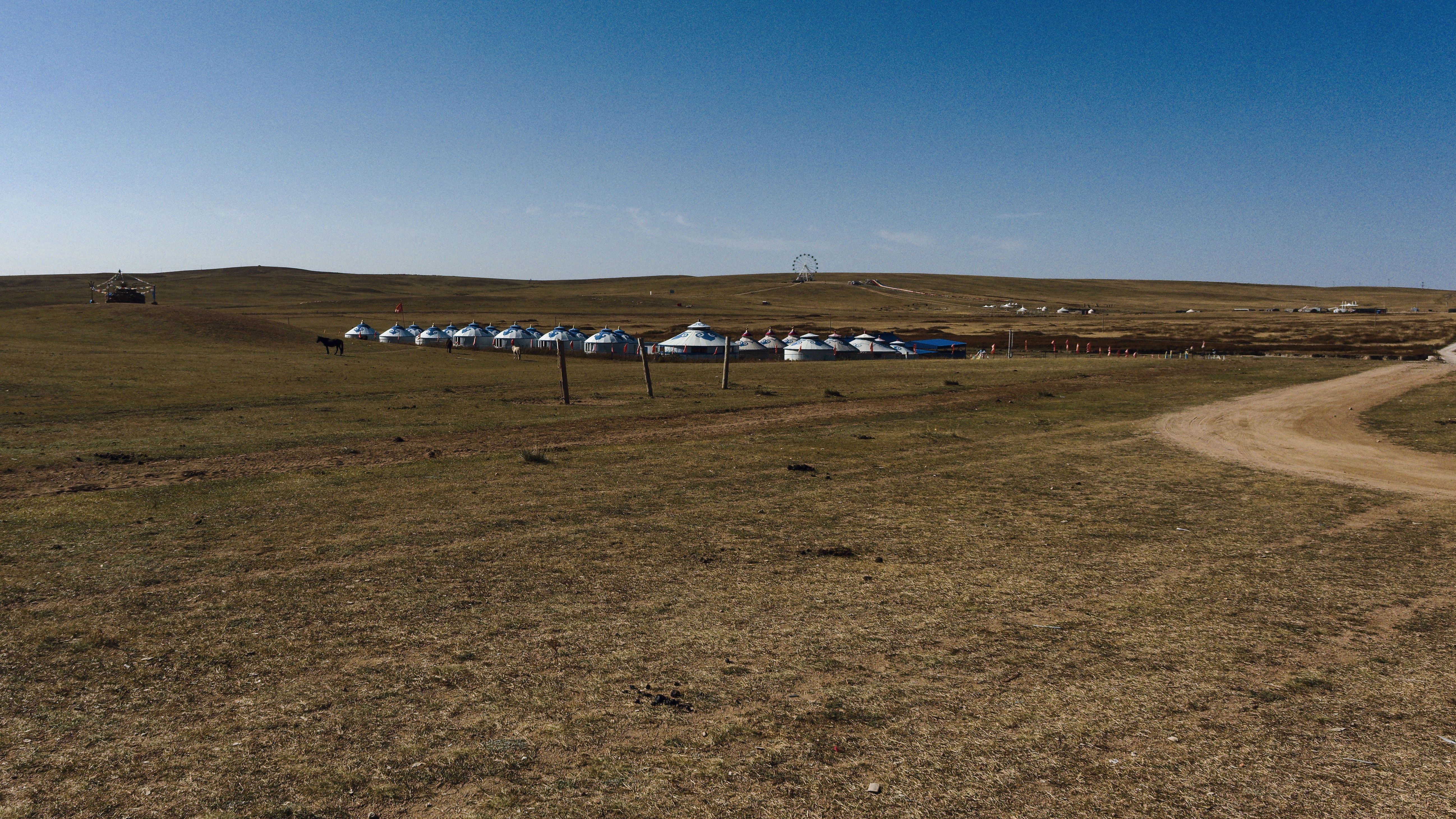
Long before bubble tea shops dotted every global city, there was another kind of Chinese milk tea — brewed not with powdered creamer and tapioca pearls, but with compressed brick tea, fresh animal milk, and a pinch of salt, stirred over a fire on the vast grasslands of Inner Mongolia. This is the original milk tea (naicha), telling a different story about Chinese food.
The Grassland Kitchen #
The diet of the Mongolian steppe is shaped by a simple reality: farming is impossible, so herding provides everything. Every meal expresses the intimate relationship between herder and animal.
“White food” — milk, yogurt, cheese, and milk tea — comes from the living animal. “Red food” — mutton, beef, and horse meat — comes from the slaughtered animal. Every part is used; nothing goes to waste.
Mongolian Milk Tea #
A block of compressed brick tea — usually dark, fermented pu’er — is broken off and boiled in water. Fresh milk is added, along with a pinch of salt, and sometimes toasted millet. The result is savory, warming, and deeply nourishing — a complete meal in a bowl, designed to sustain herders through brutally cold winters.
Guests are always offered milk tea before anything else. To refuse is an insult. The bowl is refilled continuously — a full bowl means you are welcome, an empty one signals the visit is over.
The Feast of the Whole Sheep #
When a guest of honor arrives, a whole sheep is prepared — not as a display of wealth, but as a gesture of complete hospitality. Every part of the animal is used: the meat boiled or roasted, the organs prepared as delicacies, the blood made into sausage, the bones simmered for broth. The guest receives the most honored parts, and the ritual of serving follows strict protocol.
The Legacy #
The food of the grasslands embodies the wisdom of surviving in one of the harshest environments on Earth. To eat Mongolian food is to taste a landscape: the wind, the grass, the animals, and the people who have lived in harmony with all three for over three thousand years.