
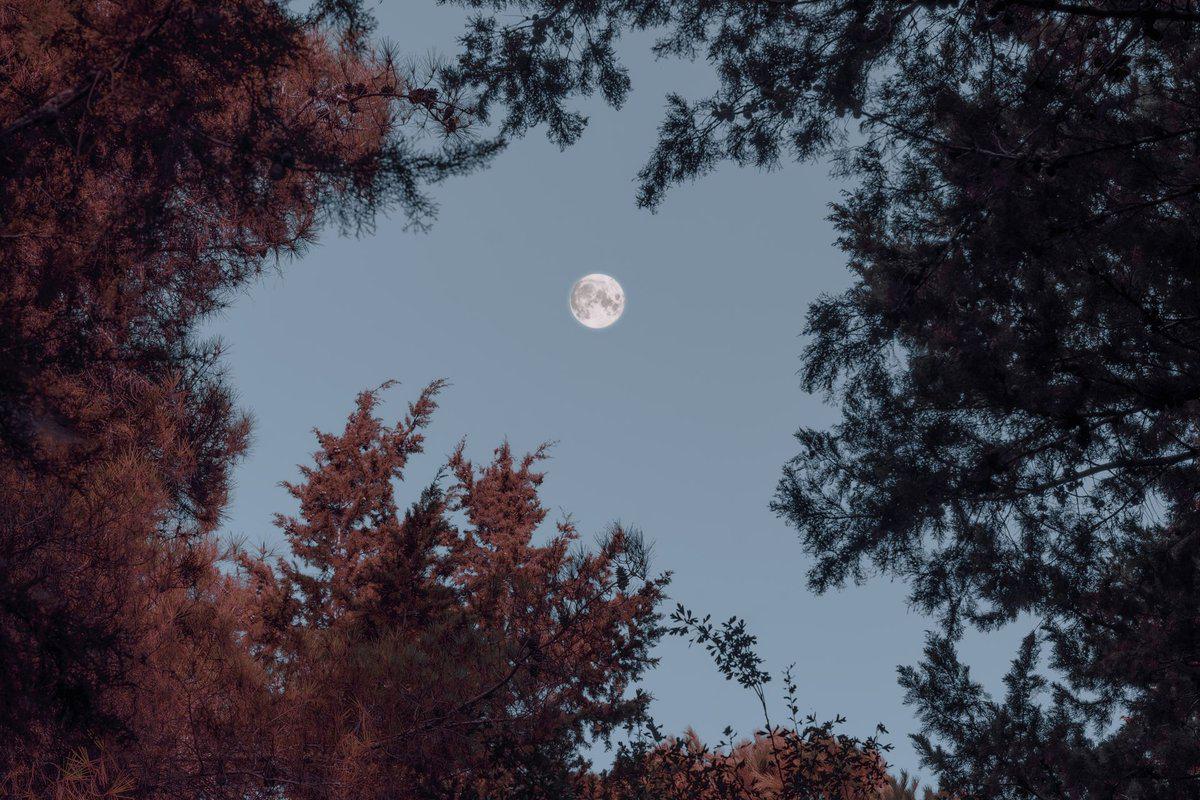
Every year on the fifteenth day of the eighth lunar month, when the moon is at its fullest, Chinese families gather to eat mooncakes and gaze at the night sky. Behind this gentle tradition lies one of the most beautiful and tragic stories in Chinese mythology: the legend of Chang’e, the Moon Goddess.
The Archer and the Elixir #
In an ancient time, ten suns blazed in the sky, scorching the Earth. The legendary archer Hou Yi climbed to the top of Kunlun Mountain and shot down nine of them, leaving only one — the sun we know today. As a reward, the Queen Mother of the West gave him an elixir of immortality.
Hou Yi did not want to live forever without his beloved wife Chang’e, so he gave her the elixir for safekeeping. But his apprentice Feng Meng, learning of the elixir, broke into their home while Hou Yi was away and demanded Chang’e hand it over. Rather than let it fall into the wrong hands, Chang’e drank the elixir herself.
She began to float upward, lighter than air, rising toward the moon. Hou Yi returned just in time to see his wife disappearing into the night sky. Heartbroken, he set out her favorite foods under the full moon, hoping to catch a glimpse of her shadow.
The Rabbit and the Woodcutter #
Chang’e is not alone on the moon. The Jade Rabbit keeps her company, endlessly pounding herbs to make the elixir of life. In another version, the rabbit pounds rice to make mooncakes.
And there is Wu Gang, a woodcutter condemned to eternally chop down a self-healing osmanthus tree. Every time his axe bites into the trunk, the wound closes instantly. It is a Chinese Sisyphus — punishment for a transgression long forgotten, the exact nature of which varies with every telling.
A Night of Stories #
When Chinese families gaze at the moon during the Mid-Autumn Festival, they are not just looking at a celestial body. They are looking at a world — a woman, a rabbit, a woodcutter, and a love story that has been told for over two thousand years. The moon is never just the moon.