
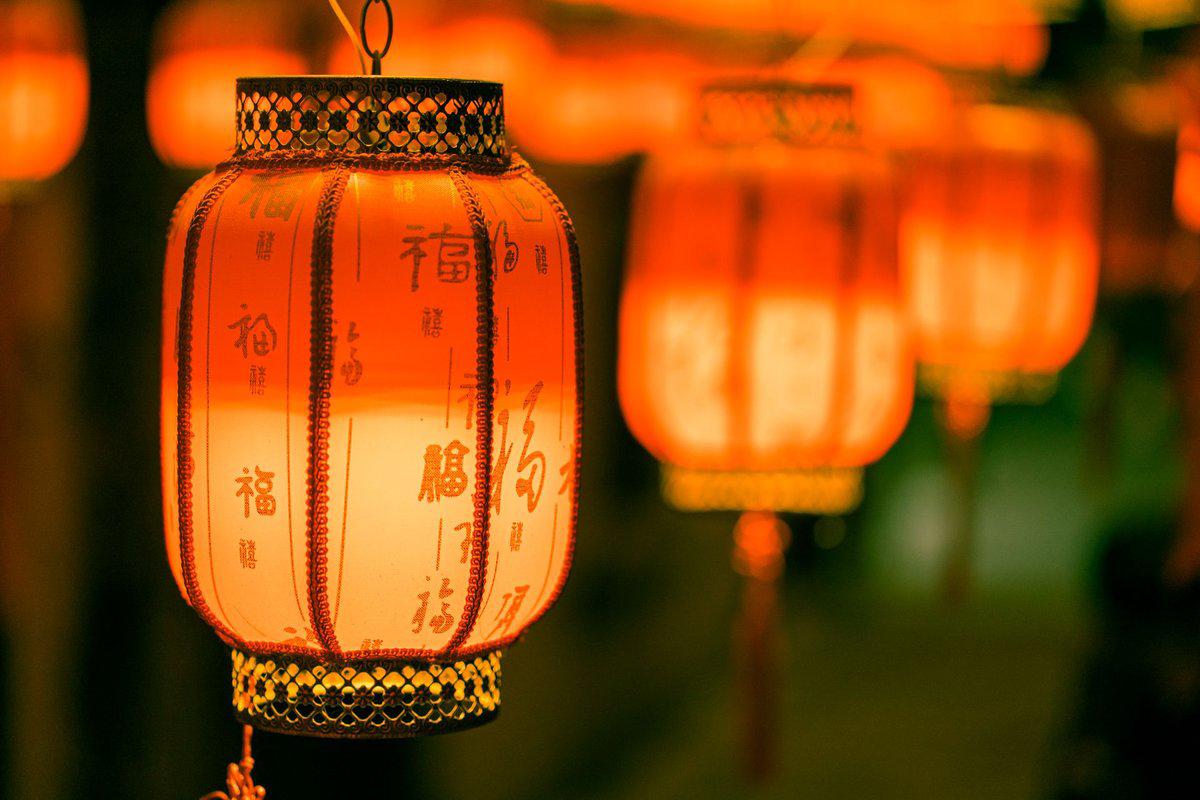
Fifteen days after Chinese New Year begins, it ends — not with a whimper but with a blaze of light. The Lantern Festival (Yuanxiao Jie) is the grand finale of the Spring Festival season, falling on the first full moon of the lunar year. Streets fill with glowing lanterns of every shape and size, families solve riddles written on hanging paper strips, and everywhere people eat tangyuan — sweet glutinous rice balls symbolizing family togetherness.
Origins in the Han Dynasty #
The festival dates back over two thousand years to the Han Dynasty, when Buddhist monks would light lanterns to honor the Buddha on the fifteenth day of the lunar year. The practice was adopted by the imperial court and gradually spread throughout society. By the Tang Dynasty, the Lantern Festival had become a three-day carnival — one of the few occasions when the nighttime curfew was lifted, allowing people to stay out celebrating until dawn.
The Original Valentine’s Day #
In traditional China, the Lantern Festival was the real Valentine’s Day. Young women were usually confined to their homes, but on this night they were allowed out to admire the lanterns — and, inevitably, to meet young men. Countless classical poems describe romantic encounters under the lantern light. The Song Dynasty poet Ouyang Xiu wrote: “Last year on this night, the lantern market was bright as day; when the moon rose above the willows, we met as dusk fell.”
Riddles and Rice Balls #
Lantern riddles (caidengmi) are a cherished tradition. Riddles are written on strips of paper and attached to lanterns. Passersby try to solve them — a correct answer wins a small prize. The riddles range from simple wordplay to complex literary allusions, and solving them is a test of wit and education.
Tangyuan — or yuanxiao in the north — are the festival’s signature food: round, white rice balls filled with sweet sesame paste, peanut, or red bean, served in a warm, sweet soup. Their round shape and the fact that the word tangyuan sounds like tuanyuan (reunion) make them a symbol of family togetherness.