
The earliest form of Feng Shui was not about interior decoration or color schemes. It was about burial — the art of placing tombs in locations where the natural flow of qi would nourish the bones of the ancestors and, through them, bring good fortune to their living descendants. This was the Form School (Xingshi Pai), and its principles have shaped Chinese architecture and urban planning for over two thousand years.
Reading the Dragon’s Veins #
In Form School thinking, qi flows through the earth like blood through veins. The mountains are “dragons” whose ridges carry concentrated streams of energy. The ideal site for a tomb, a temple, or a home is where the dragon’s energy slows and pools — typically a sheltered spot on a south-facing slope with a protective mountain at the back (the Black Tortoise), lower hills on either side (the Green Dragon to the east, the White Tiger to the west), and an open prospect to the south (the Red Phoenix), ideally with a gentle watercourse in front.
This configuration — armchair Feng Shui — appears again and again in the siting of China’s most important buildings. The Forbidden City in Beijing, the Ming tombs, and countless temples and ancestral halls all follow this pattern. It is not superstition but a sophisticated reading of the microclimate: south-facing slopes receive more sunlight, protective hills shelter from harsh winds, and proximity to water ensures practical access.
Qi in the Built Environment #
The Form School’s principles extend to the built environment. Qi should flow through a building like a gentle stream — not too fast, or it becomes destructive; not too slow, or it stagnates. Long, straight corridors are avoided because they accelerate qi into “cutting qi” (sha qi), a hostile energy that disrupts harmony.
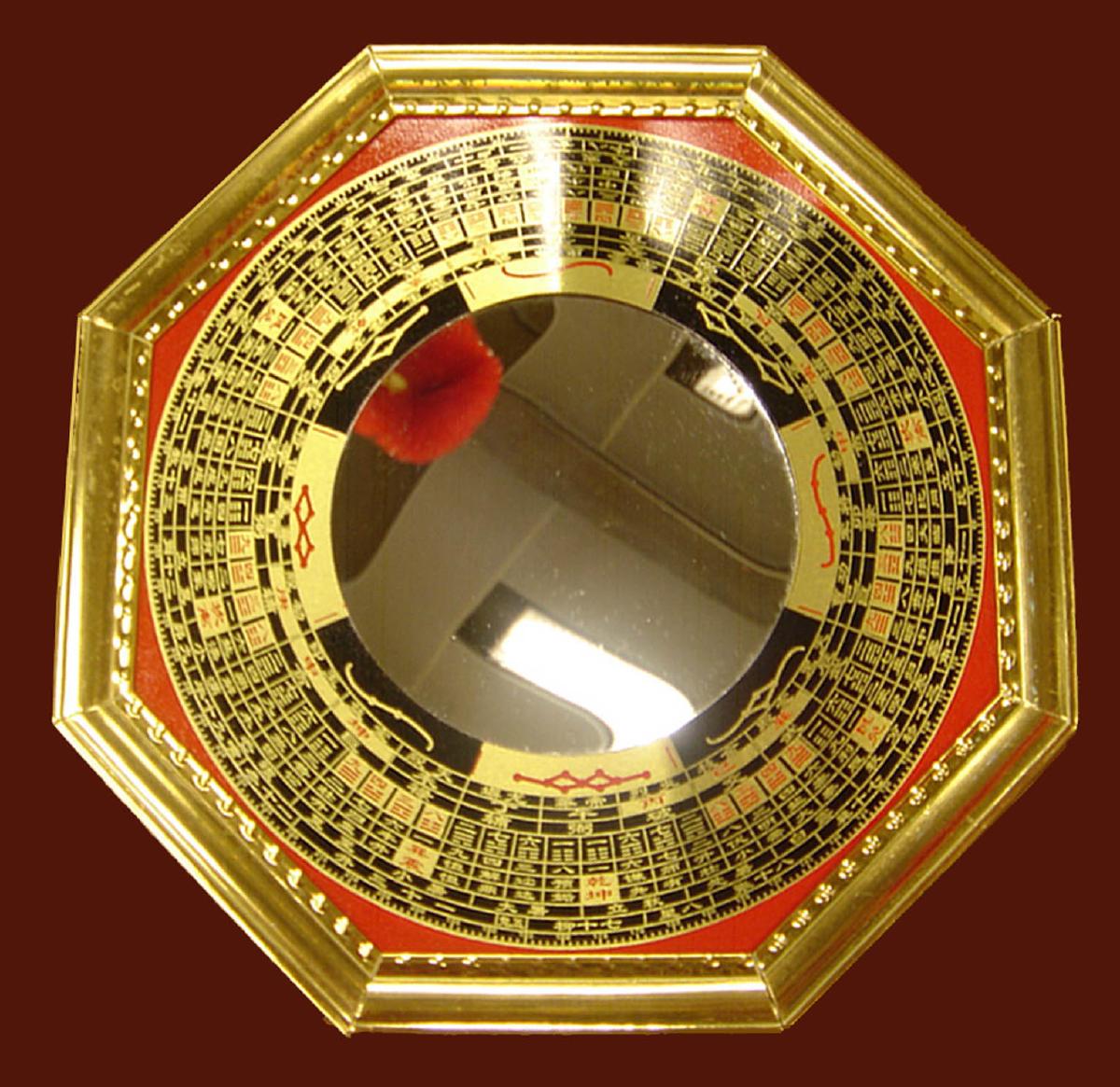
The front door is the “mouth of qi” — the primary entry point for energy. It should be welcoming, well-lit, and unobstructed. A front door that directly faces a staircase, a long hallway, or a sharp corner is receiving rushed or aggressive qi, and remedies — screens, plants, or mirrors — are prescribed to soften the flow.
From Tombs to Living Rooms #
Though the Form School began with the dead, its principles are equally applicable to the living. Every building sits within a larger landscape, and every room within a building has its own micro-geography. The Form School teaches us to read these contexts — to understand how the shape of space affects the quality of life — and to make adjustments that bring the built environment back into harmony with the natural one.