
Imagine a medical system in which the doctor does not ask “what disease do you have?” but “what pattern of imbalance are you experiencing?” This is Traditional Chinese Medicine (TCM) — a system that has been diagnosing, treating, and preventing illness for over two thousand years using a framework fundamentally different from Western biomedicine.
The Foundations #
TCM rests on several core concepts. Qi is the vital energy that animates all living things. Yin and yang are the complementary forces that must remain in balance. The Five Phases (wu xing) — Wood, Fire, Earth, Metal, and Water — describe the relationships between organs, emotions, seasons, and stages of life. The meridian system maps the pathways through which qi flows.
Unlike Western medicine, which typically treats symptoms in isolation, TCM views the body as an integrated whole. A headache is not just a problem in the head — it may indicate an imbalance in the liver, a blockage of qi, or an excess of yang energy. The practitioner’s job is to identify the underlying pattern and restore harmony.
The Four Pillars of Treatment #
TCM employs four main therapeutic approaches:
- Acupuncture — Fine needles inserted at specific points to regulate qi flow. Used for pain, stress, digestive issues, and hundreds of other conditions.
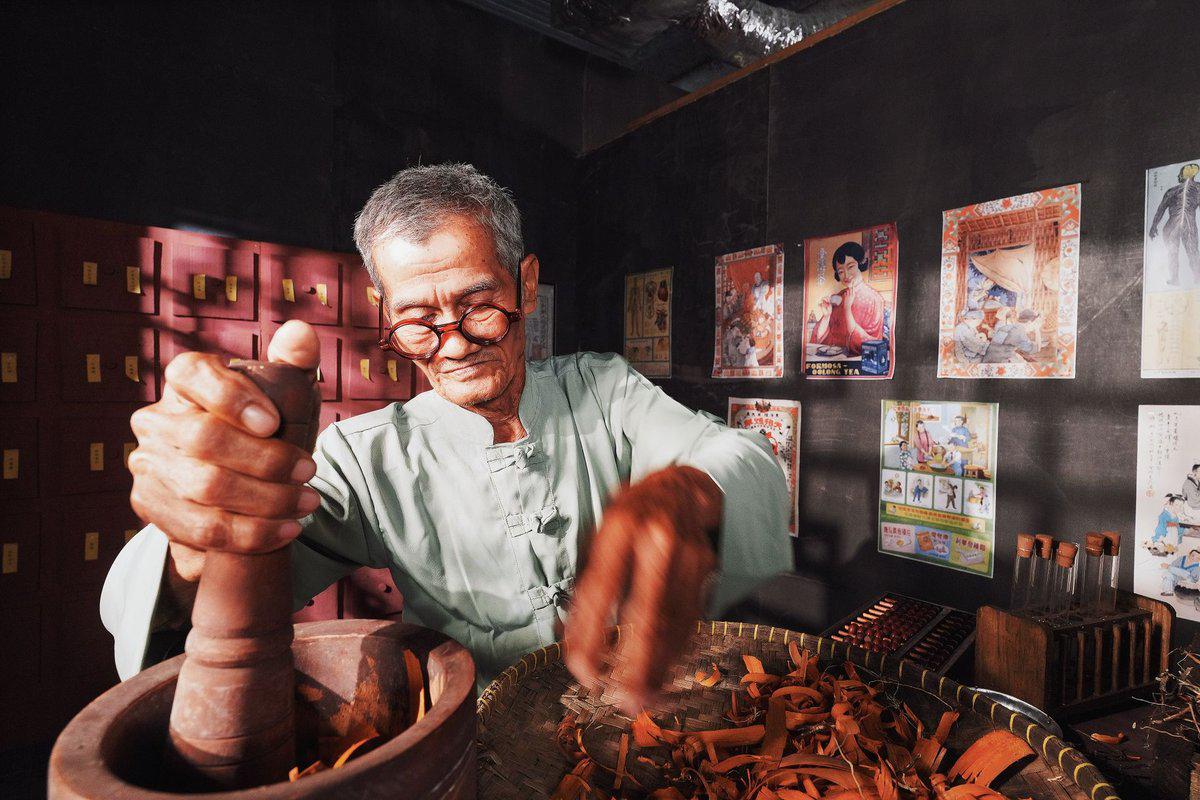
- Herbal Medicine — Complex formulas of plant, mineral, and animal ingredients, typically taken as teas, powders, or pills. Unlike Western pharmaceuticals, which target single pathways, TCM formulas are designed to address multiple aspects of a condition simultaneously.
- Tui Na (Medical Massage) — Therapeutic bodywork that manipulates muscles, joints, and meridians to promote healing.
- Qigong and Dietary Therapy — Movement, breathing, and food as medicine. In TCM, food has energetic properties — some are warming, some cooling, some dampening — and diet is prescribed accordingly.
TCM and Modern Medicine #
In China, TCM and Western medicine are not competitors but partners. Hospitals have both a Western medicine department and a TCM department, and patients may receive acupuncture alongside chemotherapy or herbal formulas alongside antibiotics. The 2015 Nobel Prize in Physiology or Medicine was awarded to Tu Youyou for discovering artemisinin — an antimalarial drug derived from sweet wormwood, a herb described in a 1,700-year-old TCM text.
TCM does not explain disease in the language of cells and molecules. It explains it in the language of patterns, relationships, and the dynamic balance of living systems. These are not contradictory perspectives — they are complementary ones.