
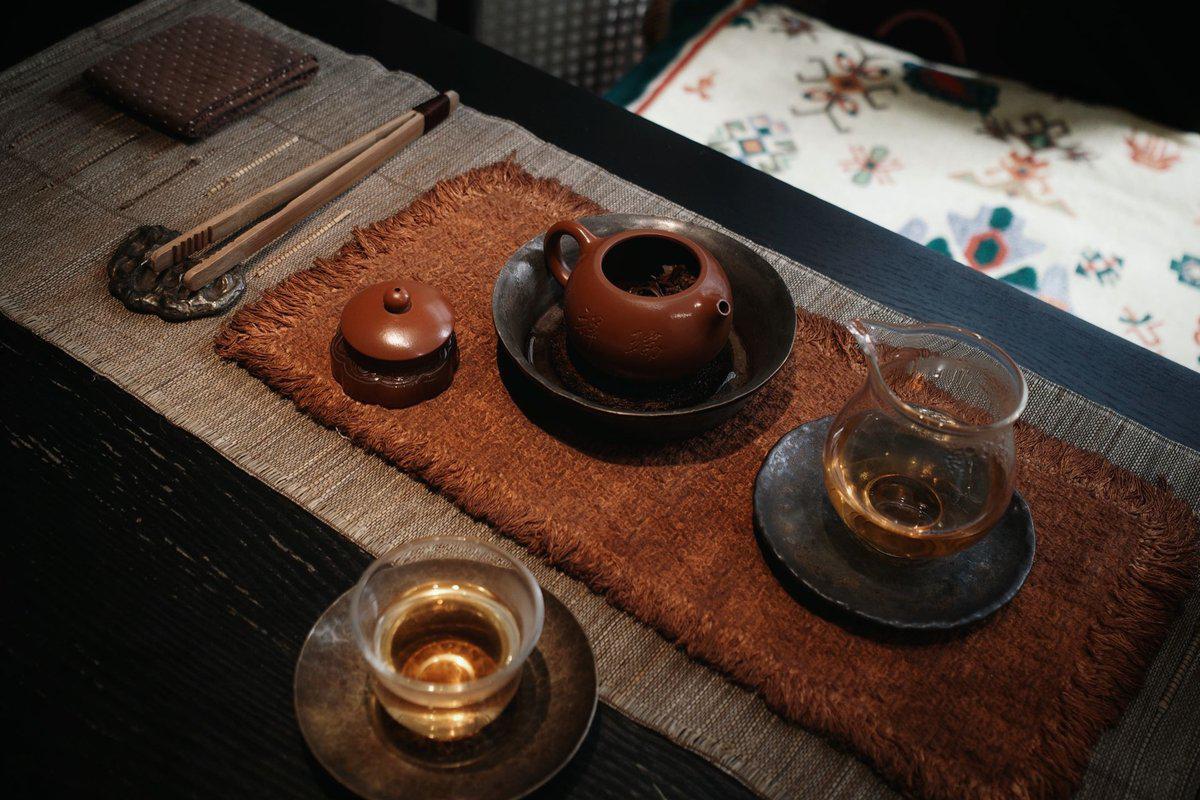
The philosophy of tea (茶道, chadao) — literally “the Way of Tea” — is a spiritual discipline disguised as a beverage. In Chinese tradition, tea is not simply drunk; it is contemplated. Every aspect of the tea experience — the temperature of the water, the shape of the cup, the silence between sips — is an opportunity for presence and self-cultivation.
The Dao of Tea #
The Chinese tea ceremony is deeply rooted in Daoist principles. The Daoist ideal of wu wei (无为, effortless action) finds expression in the unhurried, natural movements of gongfu tea preparation. The practitioner does not force the tea to yield its flavor — they create the conditions and let the leaves speak.
The tea space itself is a microcosm of the Daoist universe. The teapot is earth (the clay), water fills it, fire heats it, the metal kettle contains the boil, and the wood of the tea tray grounds the arrangement. In a single tea session, all five elements come together in perfect balance.
The Four Virtues of Tea #
Classical Chinese tea philosophy identifies four virtues:
- Harmony (和, he) — Tea brings people together. The tea table is a democracy — emperor and farmer alike drink from the same pot, and the ritual of serving and receiving tea dissolves hierarchy.
- Tranquility (静, jing) — Tea demands stillness. The water must reach the right temperature, the leaves must steep for the right time, and the drinker must slow down enough to taste. In a world of constant stimulation, tea is an invitation to pause.
- Joy (怡, yi) — The pleasure of tea is not excitement but contentment — the quiet satisfaction of a perfect infusion, the warmth of the cup in your hands, the company of a friend in comfortable silence.
- Truth (真, zhen) — Tea reveals what is real. A poor-quality leaf cannot hide behind milk and sugar; a distracted mind cannot fully taste. Tea cultivates honesty — with the leaf, with oneself, and with others.
Tea and Chan Buddhism #
Tea has a special relationship with Chan (Zen) Buddhism. Legend holds that Bodhidharma, the founder of Chan, once fell asleep during meditation. Enraged at his own weakness, he tore off his eyelids and threw them to the ground — where they sprouted into the first tea plants. Tea, with its ability to promote alert calm, became the monk’s companion through long hours of seated meditation.
The Chan saying “茶禅一味” (cha chan yi wei) — “tea and Zen are one flavor” — expresses the belief that the mindfulness cultivated through tea ceremony is identical to the mindfulness of meditation. To make tea with full attention is to practice Zen.
A Daily Practice #
You do not need a Yixing teapot, a refined palate, or a deep knowledge of tea classification to practice the way of tea. All you need is hot water, leaves, and the willingness to be present. Brew a cup, put down your phone, and drink it as if it were the only thing in the universe. That, in its simplest form, is chadao.