
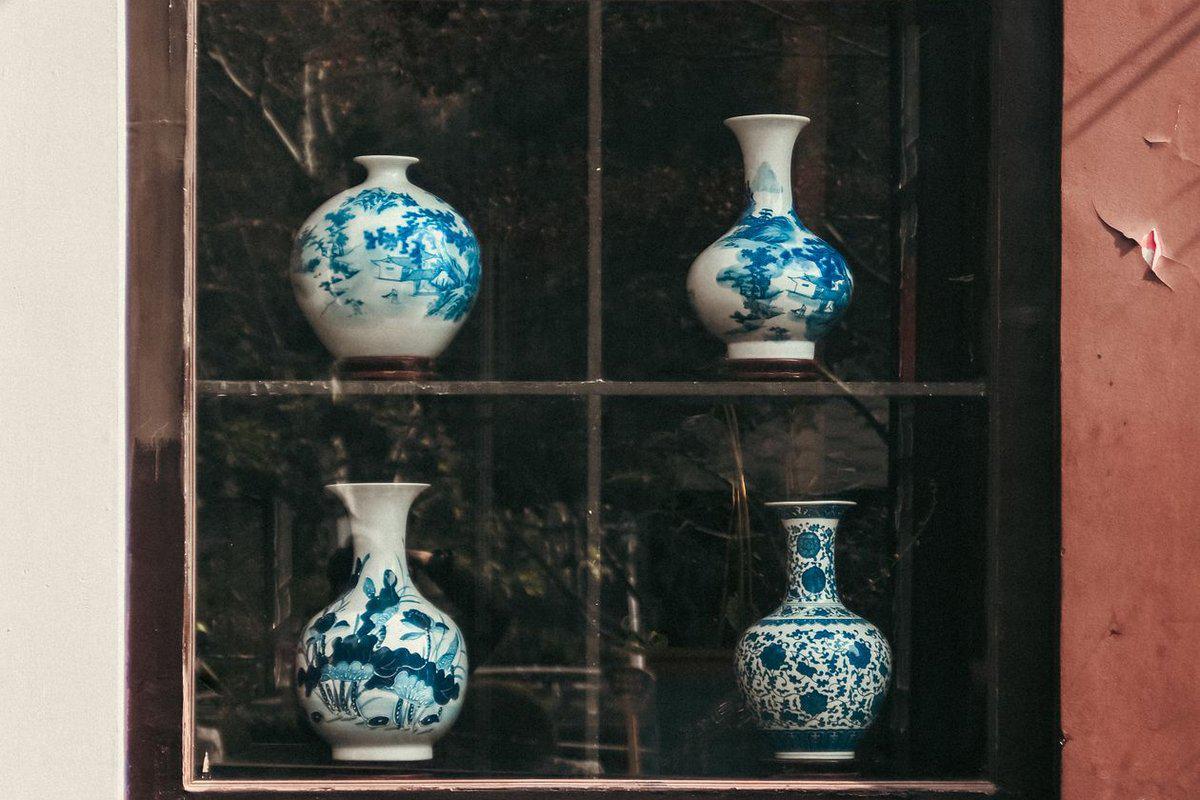
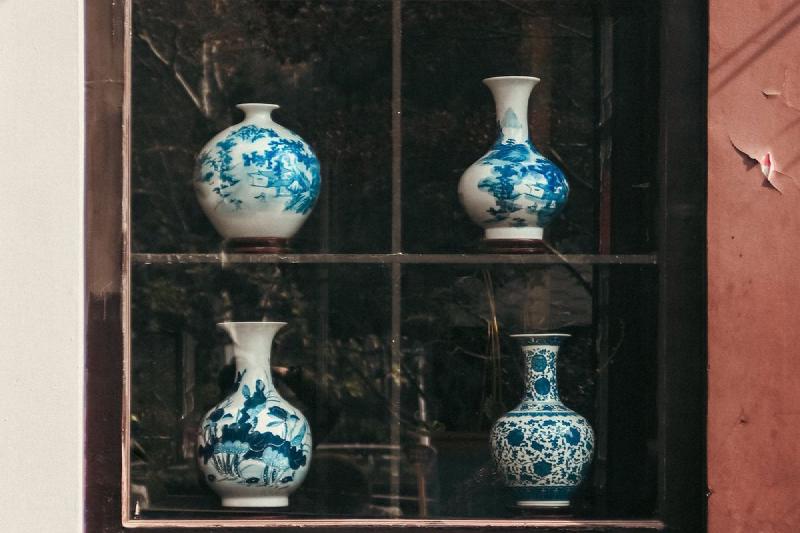
The English word china as a synonym for porcelain is no coincidence. For centuries, Chinese ceramics were the most advanced objects produced anywhere on Earth. When Marco Polo returned from his travels, he described porcelain as a magical substance made from a secret earth aged for generations.
The Terracotta Army #
The story of Chinese ceramics begins dramatically. In 1974, farmers digging a well near Xi’an uncovered the terracotta army of Qin Shi Huang, China’s first emperor. Over 8,000 life-sized clay soldiers, each with unique facial features, had stood guard for two millennia — an army of earth, waiting silently underground.
The Invention of Porcelain #
True porcelain emerged during the Tang Dynasty, when potters discovered that kaolin clay fired above 1,300 degrees Celsius produced a material that was white, translucent, and resonant — ringing like a bell when struck. The secret remained unknown to Europe until the eighteenth century.
By the Song Dynasty, ceramics had become a sophisticated art. Ru ware from the imperial kilns achieved a pale blue-green glaze so perfect that fewer than 100 pieces survive today. A single Ru ware brush washer sold at auction in 2017 for 37.7 million dollars.
Blue and White: A Global Phenomenon #
The blue-and-white porcelain most associated with China was actually a product of globalization. The cobalt for the blue pigment came from Persia, and many early designs were made for the Islamic market. During the Yuan and Ming dynasties, Jingdezhen produced porcelain on an industrial scale, shipping it across the Indian Ocean to Europe, the Middle East, and the Americas.
The Meaning in Patterns #
Every motif carries meaning. Peonies represent wealth. Lotus flowers symbolize purity rising from mud. Dragons represent imperial power. Bats symbolize good fortune — because the word for bat (fu) sounds exactly like the word for blessing (fu).